
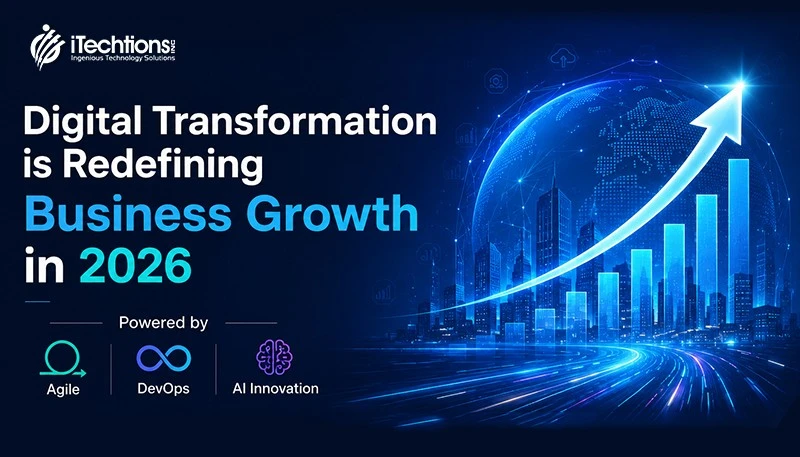
In 2026, businesses are no longer competing only on products or pricing. They are competing on speed, innovation, customer experience, and adaptability. This is where Digital Transformation becomes one of the biggest growth drivers for modern businesses. Companies across industries are now investing in smarter technologies, automation, cloud systems, and AI-powered solutions to stay ahead in an increasingly digital world.
However, technology alone is not enough. To successfully transform digitally, businesses also need the right working approach. This is why Agile and DevOps have become essential parts of every successful digital transformation strategy. Together, they help organizations innovate faster, improve collaboration, reduce operational delays, and deliver better customer experiences.
What is Digital Transformation?
Digital Transformation is the process of using modern technologies to improve business operations, customer interactions, and overall company performance. It involves integrating digital tools such as cloud computing, automation, artificial intelligence, and data analytics into everyday business activities.
Businesses today are transforming digitally to:
- Improve efficiency
- Increase productivity
- Deliver better customer experiences
- Reduce operational costs
- Scale faster in competitive markets
In simple terms, Digital Transformation helps businesses work smarter instead of harder.
Why Businesses Need Agile and DevOps in 2026
One of the main reasons companies are focusing on Agile Digital Transformation is the rapidly changing business environment. Customer expectations are evolving faster than ever. People now expect instant responses, seamless digital experiences, and personalized services.
Traditional business models often struggle to meet these expectations because they rely on slow processes and outdated systems. This is where Agile and DevOps become essential.
Role of Agile in Digital Transformation
Agile is a modern working methodology where teams work in smaller and faster cycles instead of long development processes. Businesses can quickly test ideas, gather feedback, improve products, and release updates continuously.
Benefits of Agile:
- Faster product delivery
- Better collaboration
- Improved flexibility
- Quick response to market changes
- Higher customer satisfaction
Agile allows businesses to adapt faster while reducing the risks associated with large-scale projects.
Role of DevOps in Digital Transformation
DevOps improves collaboration between development and operations teams. Instead of working separately, teams work together to automate testing, deployment, monitoring, and software delivery.
Benefits of DevOps:
- Faster deployments
- Reduced downtime
- Better software quality
- Continuous delivery
- Improved operational efficiency
The combination of Agile and DevOps creates a strong foundation for innovation and business scalability.
How Digital Transformation Drives Business Growth
One of the biggest examples of How Digital Transformation Drives Business Growth can be seen in customer experience improvements. Modern consumers prefer businesses that provide seamless online experiences, quick support, and personalized interactions.
Companies using AI-powered chatbots, cloud-based CRM systems, workflow automation, and real-time analytics can understand customer behavior more effectively and improve customer satisfaction.
For example, an e-commerce company using AI-driven recommendation systems can suggest products based on customer preferences and purchase history. This improves customer engagement, increases conversions, and boosts revenue.
AI-Driven Digital Transformation is Reshaping Businesses
One of the most important Digital Transformation Trends 2026 is the rise of AI-Driven Digital Transformation. Artificial Intelligence is now helping businesses automate repetitive tasks, improve decision-making, and deliver personalized customer experiences.
Businesses are using AI for:
- Customer support chatbots
- Predictive analytics
- Marketing automation
- Sales forecasting
- Workflow automation
- Fraud detection
AI-powered analytics tools also help businesses make smarter decisions using real-time data instead of assumptions.
Cloud Technology and Automation in Digital Transformation
Cloud computing is becoming a major part of every digital transformation strategy. Businesses are moving from traditional infrastructure to cloud-native platforms because they offer:
- Better scalability
- Lower operational costs
- Remote accessibility
- Improved collaboration
- Faster deployment
Automation is also helping organizations reduce manual work and increase efficiency. Tasks that once required hours can now be completed in minutes using AI and automated systems.
This allows teams to focus more on innovation and business growth instead of repetitive operational work.
Challenges Businesses Face During Digital Transformation
Although Digital Transformation offers many benefits, businesses still face several challenges during implementation.
Common Challenges:
- Resistance to change
- Lack of technical expertise
- Outdated systems
- Poor digital transformation planning
- Cybersecurity risks
- Budget limitations
This is why companies need a clear digital transformation strategy along with strong leadership and team collaboration.
Future of Agile Digital Transformation in 2026
The future of Agile Digital Transformation will focus heavily on:
- Artificial Intelligence
- Hyperautomation
- Cloud-native infrastructure
- DevSecOps
- Data-driven decision making
- Personalized customer experiences
Businesses that continuously innovate and adopt digital technologies will remain more competitive in the evolving digital economy.
Companies that combine Agile methodologies, DevOps automation, and AI-powered technologies are expected to grow faster and deliver better customer experiences in the coming years.
Frequently Asked Questions (FAQs)
1. What is Digital Transformation in simple words?
Digital Transformation means using modern technology to improve how a business works, serves customers, and grows. It includes automation, AI, cloud computing, and digital tools.
2. How do Agile and DevOps support Digital Transformation?
Agile helps businesses work faster and adapt quickly, while DevOps improves software delivery and automation. Together, they make digital transformation smoother and more efficient.
3. Why is Digital Transformation important in 2026?
Digital Transformation is important because customers now expect faster services, personalized experiences, and seamless digital interactions. Businesses that fail to adapt may struggle to compete.
4. What are the biggest Digital Transformation Trends in 2026?
Some major Digital Transformation Trends 2026 include:
- AI-powered automation
- Cloud-native applications
- DevSecOps
- Hyperautomation
- Real-time analytics
- Personalized customer experiences
5. How does AI-Driven Digital Transformation help businesses?
AI helps businesses automate tasks, analyze customer behavior, improve decision-making, reduce costs, and increase operational efficiency.
6. What industries benefit the most from Digital Transformation?
Industries such as healthcare, finance, retail, education, logistics, manufacturing, and IT services benefit significantly from digital transformation technologies.
Conclusion
In 2026, Digital Transformation is no longer optional for businesses aiming for long-term success. Organizations that combine Agile and DevOps with AI-powered technologies, cloud systems, and automation are becoming faster, smarter, and more customer-focused.
By adopting a strong digital transformation strategy, businesses can improve operational efficiency, reduce costs, enhance customer experiences, and scale more effectively in competitive markets.
The future belongs to businesses that continuously innovate, adapt quickly, and build digitally connected ecosystems designed for sustainable growth.