
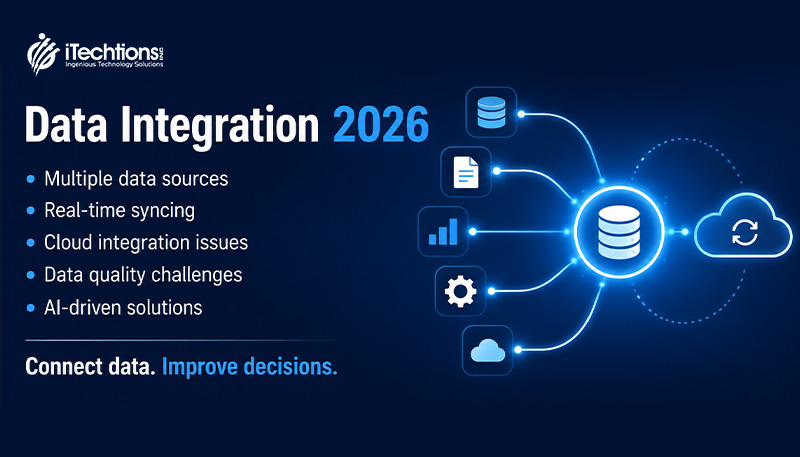
In 2026, businesses are generating more data than ever before. Every click, online purchase, customer interaction, IoT device, and AI-powered system creates valuable information. But collecting data is only one part of the process. The real challenge is connecting all that information in a meaningful way. This is where data integration becomes essential.
Today, companies use multiple platforms such as cloud applications, CRMs, analytics tools, and AI systems. Without proper data integration, information remains scattered across different systems, making it difficult for businesses to make quick and accurate decisions.
As technology continues to evolve, organizations are facing several new data integration challenges in 2026. From security concerns to real-time processing demands, businesses must adopt smarter and more scalable solutions to stay competitive. In this blog, we’ll explore the biggest challenges companies face and the best ways to solve them.
What Is Data Integration?
Data integration is the process of combining data from multiple sources into one unified system. It allows businesses to access accurate and organized information in real time. For example, an e-commerce company may collect data from:
- Website analytics
- Customer support platforms
- Payment gateways
- Inventory systems
- Marketing tools
Without proper integration, these systems operate separately, creating confusion and inefficiency. Modern data integration tools help businesses connect these platforms and create a smooth flow of information.
Top Data Integration Challenges in 2026
1. Too Much Data from Too Many Sources
One of the biggest data integration challenges in 2026 is handling the huge amount of data coming from different platforms. Businesses are no longer dealing with just databases and spreadsheets. They now manage cloud applications, IoT devices, AI-generated content, social media data, and real-time customer interactions.
The problem is that every system stores data differently. Some platforms update information instantly, while others work on scheduled updates. This creates delays, duplication, and inconsistency.
How to Solve It
Companies should invest in scalable cloud-based data integration solutions that can process large amounts of information efficiently. Using automated pipelines and API-based integration can make data movement faster and more reliable.
Modern businesses are also adopting centralized data integration platforms to simplify operations and improve visibility across departments.
2. Poor Data Quality
Even the best technology cannot deliver useful insights if the data is inaccurate. Duplicate records, missing values, and inconsistent formats continue to create major problems for businesses.
Poor-quality data affects:
- Business reports
- Customer experiences
- AI predictions
- Decision-making processes
This remains one of the most common issues in modern data integration systems.
How to Solve It
Organizations should regularly clean and validate their data using advanced data integration tools. Automated monitoring systems can quickly detect errors before they impact business operations.
Creating clear data governance policies also helps maintain consistency and accuracy across all systems.
3. Real-Time Data Processing Demands
In 2026, businesses can’t afford delays. Customers expect instant responses, and companies need real-time insights for faster decision-making.
For example:
- Banks need instant fraud detection
- Retailers want live inventory tracking
- Streaming platforms personalize content in real time
Traditional batch processing systems are often too slow for these modern needs.
How to Solve It
Businesses should move toward real-time streaming technologies and event-driven architectures. Modern data integration solutions now support continuous synchronization instead of scheduled updates.
This allows organizations to react faster and improve customer experiences significantly.
4. Multi-Cloud and Hybrid System Complexity
Most businesses today use a combination of cloud services and on-premise systems. While this improves flexibility, it also creates integration challenges.
Different platforms often have:
- Different APIs
- Security rules
- Data formats
- Compliance requirements
Connecting everything smoothly becomes difficult without the right strategy.
How to Solve It
Using a flexible data integration platform that supports hybrid and multi-cloud environments is the best solution. Businesses should also focus on API-first architecture and open standards to reduce compatibility issues.
This approach improves scalability and avoids dependency on a single vendor.
5. Data Security and Privacy Concerns
As cyber threats continue to rise, protecting business data has become more important than ever. At the same time, governments are introducing stricter privacy regulations.
During data integration, sensitive information often moves between multiple systems, increasing the risk of breaches and unauthorized access.
How to Solve It
Organizations should use encrypted connections, role-based access controls, and secure APIs within their data integration solutions. Regular audits and compliance checks can also reduce security risks.
Many companies are now adopting zero-trust security models to strengthen data protection.
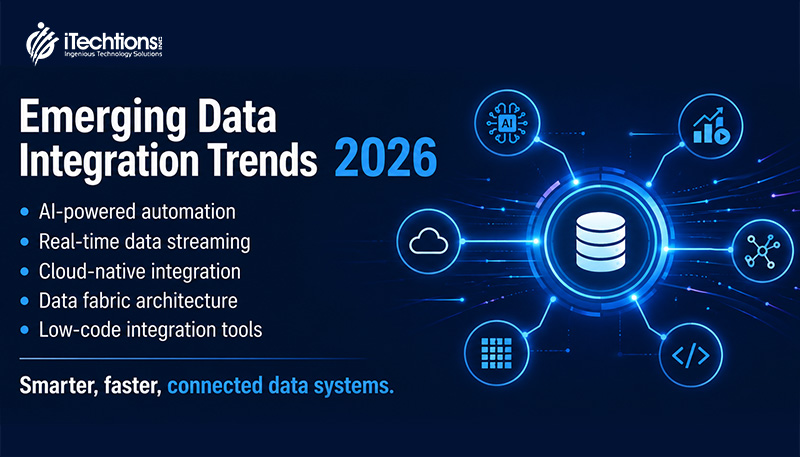
Emerging Data Integration Trends 2026
Several exciting data integration trends 2026 are changing how businesses manage information.
Artificial intelligence is making data integration smarter and faster. AI tools can automatically detect errors, map data fields, and optimize workflows with minimal human effort.
Data Fabric Architecture
Data fabric helps businesses connect systems across different environments using automation and metadata. This makes managing enterprise data much easier.
Real-Time Streaming
Real-time data processing is becoming a standard requirement. Companies are increasingly using streaming technologies to improve responsiveness and customer experiences.
Low-Code Integration Platforms
Low-code platforms are helping businesses build workflows quickly without advanced coding knowledge. This reduces development time and operational complexity.
Choosing the Right Data Integration Tools
Not all data integration tools are the same. Businesses should choose tools that offer:
- Real-time processing
- Strong security
- AI-powered automation
- Cloud compatibility
- Easy scalability
- Monitoring and governance features
The right data integration platform can help organizations reduce costs, improve productivity, and make better business decisions.
Best Practices for Successful Data Integration
To overcome modern integration challenges, businesses should follow a few important practices:
Build a Clear Data Strategy
A well-planned strategy ensures all systems and teams work together effectively.
Focus on Data Governance
Strong governance improves data quality, compliance, and security.
Automate Monitoring
Continuous monitoring helps detect issues before they become major problems.
Upgrade Legacy Systems
Old systems often slow down integration processes. Modernizing infrastructure improves flexibility and performance.
Invest in Scalable Solutions
Future-ready data integration solutions help businesses adapt to changing technologies and growing data demands.
FAQ
1. What is data integration?
Data integration is the process of combining data from different systems into one organized and unified view.
2. What are the biggest data integration challenges in 2026?
The biggest challenges include poor data quality, real-time processing, security risks, and managing multi-cloud environments.
3. Why are data integration tools important?
Data integration tools help automate workflows, improve data accuracy, and simplify the connection between systems.
4. What is a data integration platform?
A data integration platform is software that connects, manages, and synchronizes data across multiple applications and environments.
5. What are the latest data integration trends 2026?
Key data integration trends 2026 include AI-powered automation, real-time streaming, data fabric architecture, and low-code platforms.
Conclusion
As businesses continue to rely on digital technologies, the importance of data integration will only grow stronger. Companies in 2026 are dealing with more data, more systems, and higher customer expectations than ever before.
While challenges such as poor data quality, cloud complexity, and security risks can create obstacles, the right approach can make a huge difference. By using modern data integration tools, investing in scalable data integration platforms, and following smart integration strategies, businesses can improve efficiency and make faster, data-driven decisions.
The future belongs to organizations that can connect and use their data effectively. Businesses that adopt advanced data integration solutions today will be better prepared for tomorrow’s digital world.